Globalism & Regionalism

OK, so the global economy is in freefall, the days of cheap oil are gone, for good, the latest data about climate change is fast exceeding our worst fears, and severe food shortages loom for hundreds of millions of people. But there are still lots of people out there who think the "globalisation project" is firmly on track.

There is no clearer example of the kind of contradictions now arising out of clashing world views. Every government in the world is theoretically signed up to sustainable development, but not one of them believes that this entails anything other than "business-as-usual" with a few low-carbon trimmings added on. Yet all the evidence regarding the state of the planet shows far more dramatic, structural changes are inevitable. And imminent. Clashing tectonic plates come to mind.

My view on this is simple: this particular model of globalisation (US-led, neo-liberal, deregulated globalisation) is dead in the water. What’s more, the need for a completely different kind of globalisation (based on dramatic decarbonisation and the accelerated achievement of the Millennium Development Goals, underpinned by local and regional economic development) has never been more urgent.

And that’s exactly what my new book (or booklet rather!) "Globalism & Regionalism" is all about. It pulls no punches. The ideological fundamentalism that has shaped the last two decades is at last in retreat, but it will take a long time to repair the massive damage caused. We desperately need some new – and honest – thinking to create a more equitable, resilient and sustainable model of globalisation.

Whatever some people may say, it’s not too late. There’s still time to turn things around. But every year we press ahead – unheedingly, it would seem – with our current model of globalisation, it makes it that much harder to bring forward the necessary alternatives.

globalism_regionalism_front_cover.jpgGlobalism and Regionalism
Edge Futures
Paperback, 19.0 x 14.0 cm, 96 pages
UK £7.99
Globalism and Regionalism considers the impact that dwindling resources and restricted travel will have on global competitiveness and regional identity. Competition between countries is likely to increase. Whilst this may lead to conflict it could also facilitate greater creativity. This in turn will put a premium on technological advancement and on our ability to respond rapidly to change. Simultaneously, regionalism will develop and localities could become more distinctive and potentially aggressive.

Posted on August 14, 2008 5:33 PM | | Comments (1) | TrackBacks (0)

Coal verses Nuclear

So, here are the offending words:

"I have now reached the point at which I no longer care whether or not the answer is nuclear. Let it happen – as long as its total emissions are taken into account, we know exactly how and where the waste is to be buried, how much this will cost and who will pay, and there is a legal guarantee that no civil nuclear materials will used by the military. We can no longer afford any rigid principle but one: that the harm done to people living now and in the future most be minimised by the most effective means, whatever they might be."

Source: one George Monbiot, scourge of literally all and sundry, especially of those who are perceived by him to be "betraying the cause."

Context: George is (probably even now) at the Climate Camp outside Kingsnorth in Kent, energetically supporting the campaign against E.ON's proposal to build a new coal-fired power station at Kingsnorth – with or without Carbon Capture and Storage (CCS) built in.

Common ground: this is a campaign with which I am in total agreement – planning permission for E.ON at Kingsnorth would usher in a new and utterly disastrous lease of life for coal in the UK. There may be up to eight further coal-fired power stations in the pipeline. The fact that BERR would appear to be minded to go ahead with such a proposal tells you all you need to know about the Government’s head-long retreat from what we now know to have been the high point of sustainable energy thinking in the 2003 Energy White Paper.

Disagreement: as George says, a horror story. But does one’s horror at one horror story justify turning a blind eye to another – equally horrifying – horror story? "Yes", says George, because our every sinew must now be strained to combat the threat of resurgent coal. "No", say I, because a resurgent nuclear industry constitutes (almost) as grave a threat to the emergence of truly sustainable energy strategies as coal does.

I am putting the 'almost' in there to build a bridge back to George's startlingly irresponsible and throw-away 'green light' for nuclear. As you can see, he is trying to hedge that improbable endorsement with a few conditions that both he and I would agree are all but impossible for the nuclear industry to comply with.

But a communicator as astute and clever as George should (and surely does) know the difference between a 'Yes … If' position and a 'No … Unless' position.

Does all this mean an irrevocable split in the Green Movement? Yes and No. Yes, because there are indeed widely diverging views about the potential contribution that nuclear might make to a low-carbon world. No, because there always have been such diverging views, and we are all (for the most part!) united in our anger and disgust at the sheer stupidity of something like Kingsnorth.

So please do check out the Climate Camp 08 website. It's excellent.

Posted on August 8, 2008 10:39 AM | | Comments (3) | TrackBacks (0)

Low Impact Food

So here's another sustainability bottom line: the prospect of 120 billion animals for human consumption is no more sustainable than the prospect of 9 billion human beings. The two numbers are connected of course: more humans, more meat consumption. More better-off humans, much more meat consumption – with a few exceptions like India.

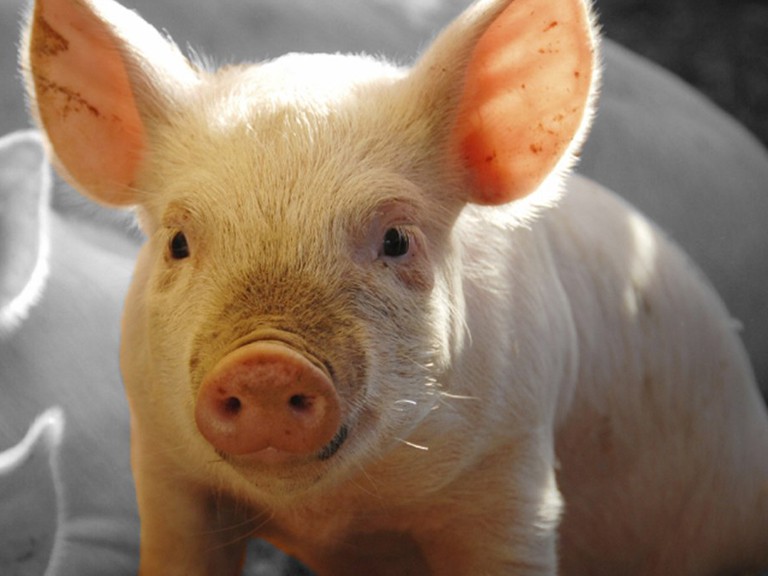
There are 60 billion animals in the world today, a number which the Food and Agriculture Organisation reckons will double by 2050 simply because of increased demand. The combined impact of these animals is already massive, accounting for 18% of total global warming effect, for a third of the world’s arable land, for worsening levels of water and air pollution, and for equally massive impacts on human health. And that’s before one begins to think about these things from animal welfare perspective.

A sustainable world will, therefore, be a world in which less meat is consumed – especially in countries like ours, which already eats too much of it. I have not met anyone who can refute the logic of that – especially if you subscribe (as our Government does) to the notion that we should only be increasing food supply "in a way that does not degrade the natural resources on which farming and food production ultimately depend." Rest assured that going from 60 to 120 billion animals will systematically screw those resources for good and all.

But logic can be a wretched thing when it comes to taking your electorate with you. The Cabinet Office's recently published 'Food Matters' recognised that dilemma, and seeks all sorts of different ways of finessing it. For instance, it proposes a new "Healthier Food Mark" to promote healthier, "low-impact" food in the public sector – without quite spelling out that low-impact must (presumably?) mean less meat-intensive.

Good idea, but if it's promoted with the same laissez-faire spinelessness as the current Public Sector Food Procurement initiative, it will achieve precisely nothing. Hence the excellent recommendation from the Green Alliance (in its timely and very accessible new paper "Cutting Our Carbs: Food and the Environment") that the Government should make compliance with the Healthier Food Mark compulsory for all public sector bodies by 2012. For once, this would mean leading by example and by clear, unambiguous regulation.

And if you're still uncertain why that would be such a good thing, do please check out Compassion in World Farming’s website for details of its brilliant 'Eat Less Meat' campaign.

PS By the way, I am keen to round out my troika of inherently unsustainable numbers (ie 9 billion humans, 120 billion animals) by investigating the number of pets in the world today – and exactly how fast that number is growing, with what sort of impacts on food supplies and the environment. Does anybody know where I might unearth that kind of data?

Posted on August 7, 2008 11:56 AM | | Comments (4) | TrackBacks (0)

How bad is the economic downturn?

There must be millions of people sitting around in the beautiful weekend sunshine pondering one simple question: just how bad is this “downturn” going to get? Will it turn into a “technical recession” (two quarters of continuous negative growth) from which we recover relatively quickly? Or are we in for a full-blown, thirties-style Depression? Or are we already over the worst?

One group of campaigners (authors of The Green New Deal report, published last week by the new economics foundation) are in no doubt: "we expect that the sub-prime debt crisis (in the US) will soon come to be seen as just the first domino to fall in a line of adjacent dominoes, threatening a systemic crisis. This will lead to a massive wave of corporate defaults. Because their profitability is too low to repay costly debts, these companies will likely default, tipping their lenders-banks and institutions such as Hedge Funds – into crisis."

Right or wrong, their analysis of how we’ve got into this mess is devastating: irresponsible deregulation of the financial services sector, leading to unethical, greedy and even fraudulent behaviour; a deliberately induced credit crunch, with financiers borrowing and lending almost without limit, leading to totally unsustainable asset inflation – particularly in housing markets; and a total failure to crack down on tax havens and dodgy accounting systems that allow corporates and the ultra-rich to prosper at the expense of the vast majority of citizens today. As Nicholas Sarkozy has said: "we have to put a stop to this financial system which is out of its mind and which has lost sight of its purpose."

The credit crunch is the first of three "crunches" that "The New Green Deal" brings together, the others comprising much more familiar territory around climate change and soaring energy prices driven primarily by an encroaching peak in oil production. Each of these crises could of course be addressed separately, but it is precisely their "perfect storm" convergence that renders contemporary capitalist economies so unprecedentedly vulnerable.

It’s also this convergence that makes the proposed solutions so compelling. Drawing deeply on the analogy with President Roosevelt’s New Deal in the early 1930s, when he dragged America out of the worst impacts of the Great Depression, the Green New Deal depends on two essential thrusts: re-regulation of financial services (including the reasserting of government control over credit and interest rates), and the re-flation of the economy through a £50 billion a year crash programme, over 10 years to reduce – dramatically reduce! – both emissions of CO2 and other greenhouse gases and our chronic dependency on fossil fuels. A new "carbon army" will create hundreds of thousands of jobs, "make every building a power station", eliminate forever the scourge of fuel poverty and severely curtail the worst activities of profiteering energy companies.

Crazy stuff? Possibly. But its worth bearing in mind that’s exactly what all the usual vested interests kept telling President Roosevelt as his New Deal set about rescuing the United States from one of the worst periods in its history.

Posted on July 28, 2008 4:31 PM | | Comments (4) | TrackBacks (0)

Energy as an employer

Great to see Al Gore out there last week refreshing his ‘Inconvenient Truth’ by challenging both Republicans and Democrats to raise their sights in the run-up to the November election. And his “100% renewables” should certainly achieve that particular goal!

Big emphasis in his campaign on jobs – and I’ve no doubt that’s going to become a huge issue here in the UK too. The Prime Minister himself is clearly alert to that reality, and liberally peppers his various energy–related speeches with references to the number of jobs that will be created in promoting different strategic priorities.

Bag-loads of salt required with these projections – most especially with the latest gob-smacker that a new nuclear programme in the UK would create around 100,000 jobs. Not a single one of the big energy companies involved as potential nuclear bidders has the first clue as to where those jobs are likely to come from.

Much better to work with the facts rather ditzy dreams. Where I am in the South West, for instance, there are now 2,900 FTE jobs in the renewable energy sector, up from 1,140 in 2005 – equivalent to an annual growth rate of around 37%. This amounts to £215 million of Growth Value Added today, up from £34 million in 2005. And that’s just the start – if the Government gets really serious about renewables, as indicated for the first time in the new draft Renewables Strategy.

It’s not just the potential growth in renewables that is threatened by today’s nuclear nonsense. All sorts of short term opportunities to rethink the current energy mix in the UK are likely to be over-looked by BERR (and indeed by investors). A month ago, for instance, Greenpeace published a fascinating report on industrial CHP which it commissioned from Poyry Energy Consulting which really should make the civil servants in BERR totally rethink their heat strategy (in so far as a heat strategy can be said to exist at all).

The report shows that at just nine industrial sites, the installation of mega CHP schemes would provide between 13,000 MW and 16,000 MW of electricity in providing the heat needed by the companies on those sites. 13,000 MW is the equivalent of eight new nuclear power stations.

And guess what? Lots of real jobs projected, no particular planning issues, no complex design challenges, no particular security risks and no legacy of nuclear waste to trouble future generations for thousands of years to come.


Posted on July 23, 2008 12:42 PM | | Comments (5) | TrackBacks (0)

One Billion Trees

As I mentioned in my blog on June 11th (Protecting the Rainforests), there is a great buzz at the moment about REDD – Reducing Emissions (of CO2 ) from Deforestation and Degradation. This is great, and getting something sorted on this before the Copenhagen Conference at the end of 2009 is going to be crucial.

But people are weird. Just because policy-makers are focused for the first time on reducing emissions from cutting down existing trees doesn’t mean that taking up emissions from planting new trees has suddenly become completely irrelevant! Or boring even.

OK, so there are indeed a number of dodgy tree-planting schemes being done as carbon offsets, and it is now widely accepted that forestry-based offsets need to be treated with a great deal of caution. But that absolutely doesn’t mean that all tree-planting has ceased to be important.

I was powerfully reminded of this last week when the official report of the Billion Tree Campaign dropped through my letterbox. If anyone reading this piece RIGHT NOW is feeling a little bit depressed, then RIGHT NOW you should check this out http://www.unep.org/billiontreecampaign.

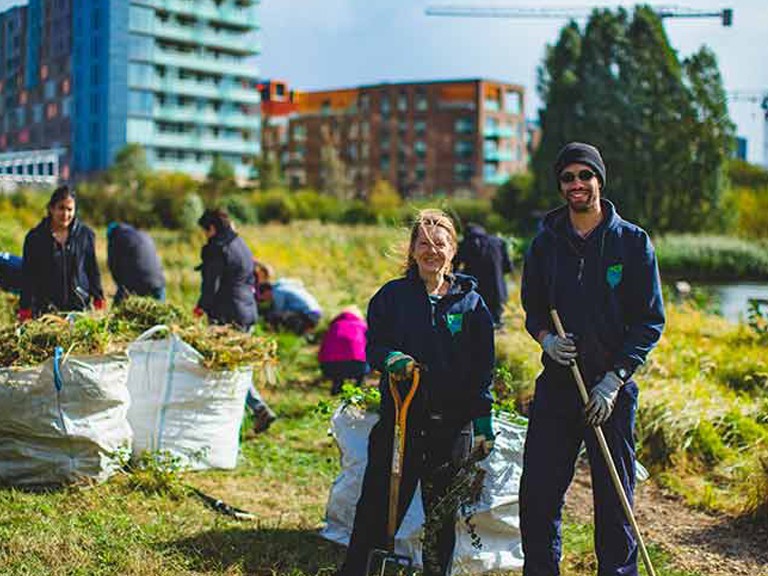
It’s an astonishing story. Back in 2005, the wonderful Wangari Maathai, winner of the 2004 Nobel Peace Prize (the first environmentalist ever to win) started campaigning around the idea of planting a billion trees. This was taken up by UNEP and a constellation of organisations all around the world, and duly launched in November 2006. I must say, I did wonder at the ambition level – that’s one hell of a lot of people out there planting one hell of a lot of trees.

I needn’t have worried. Since the launch, not just one billion, not just one and half billion, but more than two billion trees have been planted!

The overall impact of this must be extraordinary – in terms of biodiversity, soil protection, watershed management, sustainable livelihoods and so on. And that doesn’t even include the CO2 benefits: depending on the location and size of its trees, one hectare of forest can absorb approximately six tonnes of CO2 a year.

The Report is stuffed full of brilliant case studies, drawn from all over the world, involving every sector and every conceivable kind of organisation – particularly young people.

You can just feel the spirit of Wangari Maathai behind all of this. She was over in the UK a month ago to present the Awards of the annual Ashden Awards for Sustainable Energy – itself an amazing organisation (of which – to declare an interest – I’m a Trustee) with its own amazing portfolio of inspirational award winners – this year from Ethiopia, Tanzania, India, Uganda, Brazil and China, as well as Mid Wales, Cornwall, Sussex, Yorkshire, Ayrshire and Oxford!

So if the Billion Trees haven’t done it for you, then check them out too at www.ashdenawards.org

“No one can attend an event like the Ashden Awards and fail to be inspired……these Awards have told us how to illuminate the path to a sustainable future together”

(Al Gore)


Posted on July 17, 2008 10:45 AM | | Comments (2) | TrackBacks (0)